iSimangaliso Wetland Park – Maputo National Park: A Transboundary Ecosystem to Protect
Stretching across the border between South Africa and Mozambique, the iSimangaliso Wetland Park – Maputo National Park transboundary landscape represents one of the most remarkable coastal and wetland ecosystems in Africa. Covering more than 397,000 hectares, this protected area forms a continuous mosaic of marine, coastal, freshwater and terrestrial environments whose ecological integrity remains largely intact.
This extraordinary natural system demonstrates how biodiversity, landscape beauty and ecological processes can coexist across national borders, offering a powerful example of regional cooperation in conservation.
A Unique Mosaic of Ecosystems
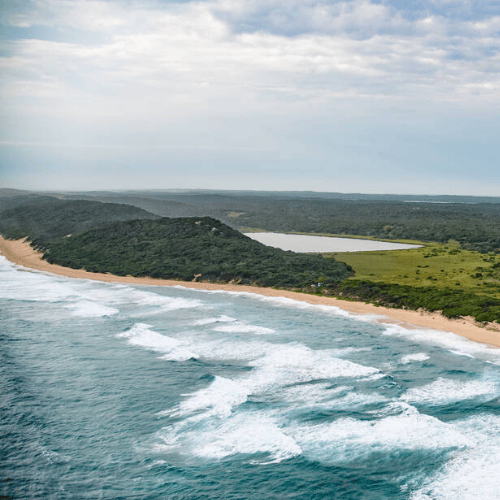
The ecological richness of the region stems from the exceptional diversity of habitats found within a relatively compact area. Coral reefs flourish beneath the clear waters of the Indian Ocean, while long stretches of pristine sandy beaches and towering coastal dunes shape the shoreline. Inland, vast wetlands, freshwater lakes, mangroves, swamps and seagrass beds merge into grasslands and savannah landscapes.
These interconnected environments function as a single ecological system. Seasonal flooding, coastal storms and ocean currents constantly reshape the landscape, allowing natural evolutionary and ecological processes to continue. This dynamic interaction between land, ocean and climate contributes to the region’s extraordinary biodiversity.
A Refuge for Exceptional Wildlife
The transboundary park supports thousands of species, many of them rare, endemic or threatened. More than 6,500 plant and animal species have been recorded within the iSimangaliso component alone, including over 500 species of birds.
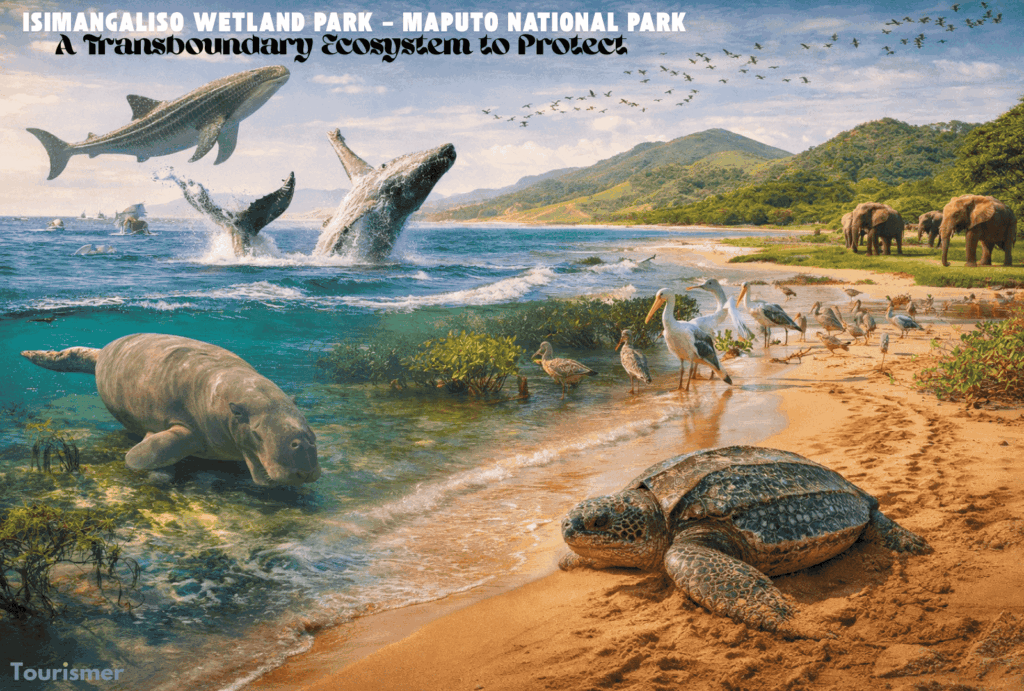
The coastline is globally significant for marine life. It hosts one of the most important nesting sites for Loggerhead and Leatherback sea turtles in the Indian Ocean, where these ancient reptiles return each year to lay their eggs along undisturbed beaches.
The surrounding waters also shelter dolphins, migrating whales and the world’s largest fish, the whale shark. Meanwhile, the seagrass meadows of Maputo Bay provide refuge for the last remaining population of dugongs in the region.
Birdlife is equally spectacular. Massive colonies of pelicans, storks, herons and terns gather in wetlands and estuaries, while the area serves as an important stopover along the East Asia–East Africa migratory bird flyway.
Landscapes of Outstanding Natural Beauty
Beyond its ecological value, the site possesses remarkable scenic qualities. The transition from turquoise coral reefs to untouched beaches, forested dunes, lakes and wetlands creates a landscape of striking contrasts.
Natural phenomena add to the spectacle:
Seasonal changes in the salinity of Lake St Lucia, driven by wet and dry climate cycles
Thousands of sea turtles emerging from the ocean to nest on quiet beaches
Large aggregations of waterbirds gathering across wetlands
The passage of whales along the coastline during migration seasons
Together, these elements create a landscape that is both visually breathtaking and ecologically significant.
A Cross-Border Model of Conservation
The protection of this ecosystem relies on cooperation between South Africa and Mozambique, each managing its respective section through national conservation frameworks.
Collaboration between the two countries is coordinated through a Transboundary Management Committee, established under the Lubombo Development Initiative. This body facilitates joint decision-making and cross-border conservation strategies, reinforcing the ecological continuity of the landscape.
Conservation Challenges
Despite its relatively strong protection status, the ecosystem remains vulnerable to several pressures:
Changes to hydrological systems affecting wetlands and lakes
Unsustainable use of marine resources
Agricultural expansion and land conversion
Human–wildlife conflicts in surrounding communities
Unregulated tourism or infrastructure development
Addressing these challenges requires careful management, long-term ecological monitoring and active engagement with local communities whose livelihoods are connected to the landscape.
Safeguarding a Natural Heritage for the Future
The iSimangaliso Wetland Park – Maputo National Park complex demonstrates the importance of protecting ecosystems that operate beyond political boundaries. Its wetlands, oceans and savannahs form a living system where natural processes continue to shape biodiversity and landscapes on a large scale.
Preserving this transboundary ecosystem is not only crucial for wildlife but also for the resilience of coastal environments in the Western Indian Ocean region. Through sustained cooperation, responsible tourism and community-based conservation, this extraordinary landscape can remain one of Africa’s most valuable ecological treasures for generations to come.