Ginger: An Ancient Root of the Indian Ocean World
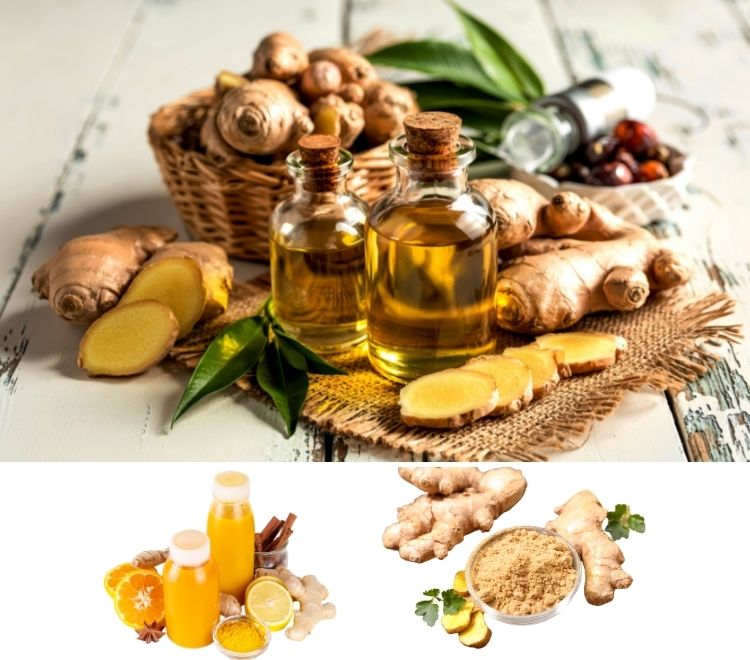
For thousands of years, ginger (Zingiber officinale) has flavored cuisines, treated everyday ailments, and accompanied the rituals of many civilizations. Introduced early through the maritime and trade routes linking Asia, Africa, and the Middle East, this aromatic root found a natural home in the Indian Ocean basin. From the coasts of India to the islands of the Comoros, from Madagascar to Sri Lanka, ginger has become deeply rooted in culinary and medicinal traditions.
A Root at the Heart of Maritime Trade
The history of ginger is closely connected to the trade routes of the Indian Ocean. Cultivated since Antiquity in South and Southeast Asia — particularly in Indonesia, Malaysia, and Borneo — it traveled to African and Arabian shores thanks to Arab and Indian merchants. It can thus be found in the traditions of Oman, Yemen, and as far as the coasts of South Africa.
In these tropical and subtropical regions, the warm and humid climate favors its cultivation. Islands such as La Réunion, Mauritius, and the Seychelles have made it a key ingredient of their Creole gastronomy.
Recognized Medicinal Virtues
Long before it became a condiment, ginger was a remedy. In India’s Ayurvedic medicine and in the traditional pharmacopoeias of Bangladesh and Sri Lanka, it is used to stimulate digestion, relieve nausea, fight inflammation, warm the body, and strengthen immunity.
In East Africa, particularly in Kenya, Tanzania, and Zanzibar, it is frequently consumed as an infusion to soothe colds and stimulate circulation. In the Maldives and Djibouti, it is also part of home remedies for sore throats.
A Pillar of Indian Ocean Cuisines
On the plate, ginger is omnipresent.
In India, together with garlic, it forms the aromatic base of many curries.
In Indonesia and Malaysia, it flavors emblematic dishes such as rendang and coconut milk curries.
In La Réunion and Mauritius, it enhances caris and rougails.
In Mozambique and Madagascar, it accompanies fish, seafood, and spicy sauces.
In the Arabian Peninsula — in the United Arab Emirates, Qatar, and Oman — it flavors tea and certain meat or spiced rice preparations.
Even in Australia and Tasmania, influenced by Asian migrations, ginger holds an important place in contemporary cuisine.
Beverages and Heritage Recipes
Among the most representative preparations:
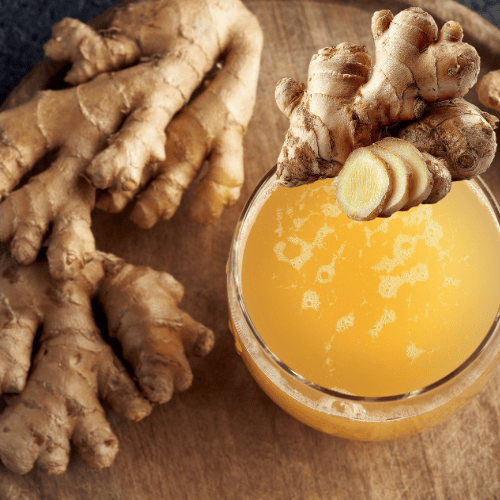
Ginger and lemon herbal infusions, consumed from India to East Africa
Spiced ginger juices, very popular in certain African regions
Traditional curries made with fresh ginger
Confectioneries and candied ginger, present in several island cultures
Ginger teas served in the Arabian Peninsula
These recipes reflect a shared heritage shaped by cultural exchanges around the Indian Ocean.
A Root Symbolizing Cultural Blending
Beyond its culinary and medicinal qualities, ginger embodies the cultural blending of the peoples of the Indian Ocean. It tells the story of navigators, spice merchants, migrations, and cultural exchanges between Asia, Africa, and the Middle East.