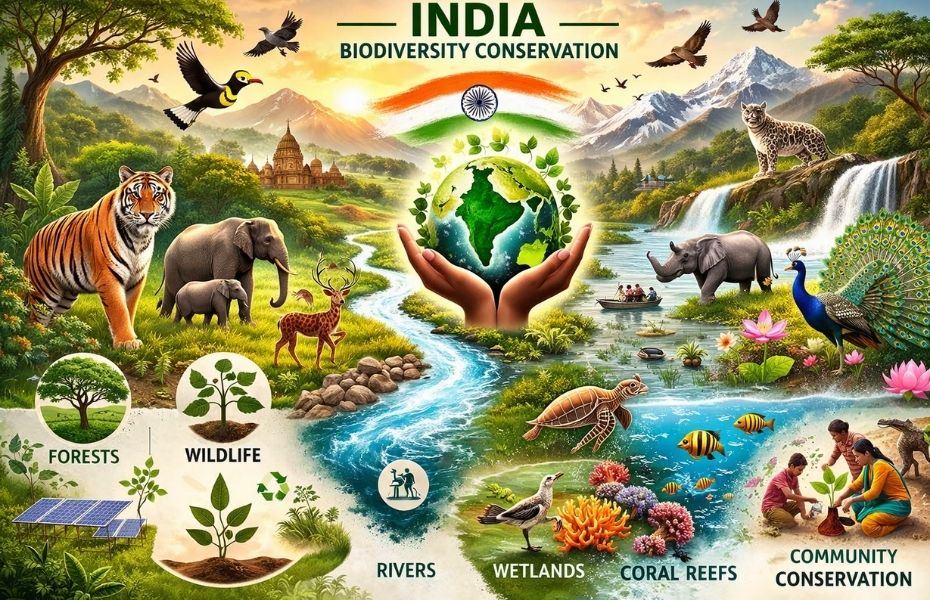
India’s Integrated Strategy for Eco-Tourism, Biodiversity Conservation, and Sustainable Development
India is emerging as a global leader in eco-tourism by aligning environmental governance, biodiversity conservation, and tourism development. Through collaboration with the Biodiversity Finance Initiative, the country is exploring innovative ways to repurpose public incentives toward nature-positive economic activities, including responsible tourism and sustainable rural development.
India’s sustainability vision positions the country as a major destination for nature-based tourism by integrating afforestation, wildlife protection, coastal restoration, and urban environmental management into its tourism growth strategy.
A flagship environmental effort is the Ek Ped Maa Ke Naam afforestation campaign, which has supported the planting of more than 26 billion saplings nationwide. As a result, forest and tree cover has reached about 25.17% of the country’s geographical area, strengthening ecosystem health, improving climate resilience, and expanding opportunities for forest-based and outdoor tourism.
Wildlife conservation is another pillar of the eco-tourism strategy. The expansion of protected ecosystems, including 58 tiger reserves and over 1,100 protected areas, has enhanced habitat security and tourism quality in safari destinations located in Madhya Pradesh, Rajasthan, and Gujarat. Species conservation successes, including Project Cheetah, have attracted global attention to India’s biodiversity restoration efforts.
Coastal and wetland conservation also plays a central role in sustainable tourism development. India hosts 96 Ramsar wetland sites, the highest number in Asia, with Indore and Udaipur recognized as wetland cities promoting birdwatching and lake tourism. Eighteen beaches across coastal states and union territories have achieved Blue Flag certification, reflecting high standards of environmental quality and sustainable tourism management.
Mangrove ecosystem restoration is supported by the Mangrove Initiative for Shoreline Habitats & Tangible Incomes (MISHTI) programme, which aims to expand mangrove cover along coastlines and saltpan areas, particularly in the Sundarbans delta and Hoogly estuary regions. The initiative provides financial assistance to local communities for participatory mangrove plantation activities while raising awareness about the ecological importance of mangroves. By restoring coastal vegetation, the programme helps reduce shoreline erosion, strengthen climate adaptation, and sustain livelihoods connected to coastal and nature-based tourism.
Urban environmental policies further support tourism competitiveness. The National Clean Air Programme has been implemented in more than 100 cities, improving air quality and enhancing visitor comfort. The Nagar Van Yojana initiative has created more than 600 urban forest projects, providing recreational green spaces that function as urban tourism assets while supporting urban biodiversity.
India is also reforming economic incentives that may negatively impact ecosystems. Under biodiversity Target 18, the country is working to identify and repurpose environmentally harmful subsidies, particularly in agriculture. While agricultural subsidies have historically supported food security and rural livelihoods, some have contributed to soil degradation, water pollution, and biodiversity loss. To address these challenges, the country is promoting organic and natural farming, reducing excessive chemical fertilizer use, and supporting community seed systems. These transitions help preserve agricultural landscapes that are important for rural and cultural tourism.
Supported by policy assessments from agricultural and environmental research institutions, subsidy reform aims to ensure that economic development remains compatible with ecosystem protection and tourism sustainability. By strengthening green rural economies, protecting coastal habitats, and promoting community-based tourism experiences, India is advancing a holistic model where tourism growth contributes to long-term environmental and socio-economic resilience.
Overall, India demonstrates how biodiversity finance reform, ecosystem restoration, and responsible tourism can be integrated into a sustainable development strategy that supports both nature conservation and economic prosperity.