India trekking : the “Great Wall of Maharashtra”
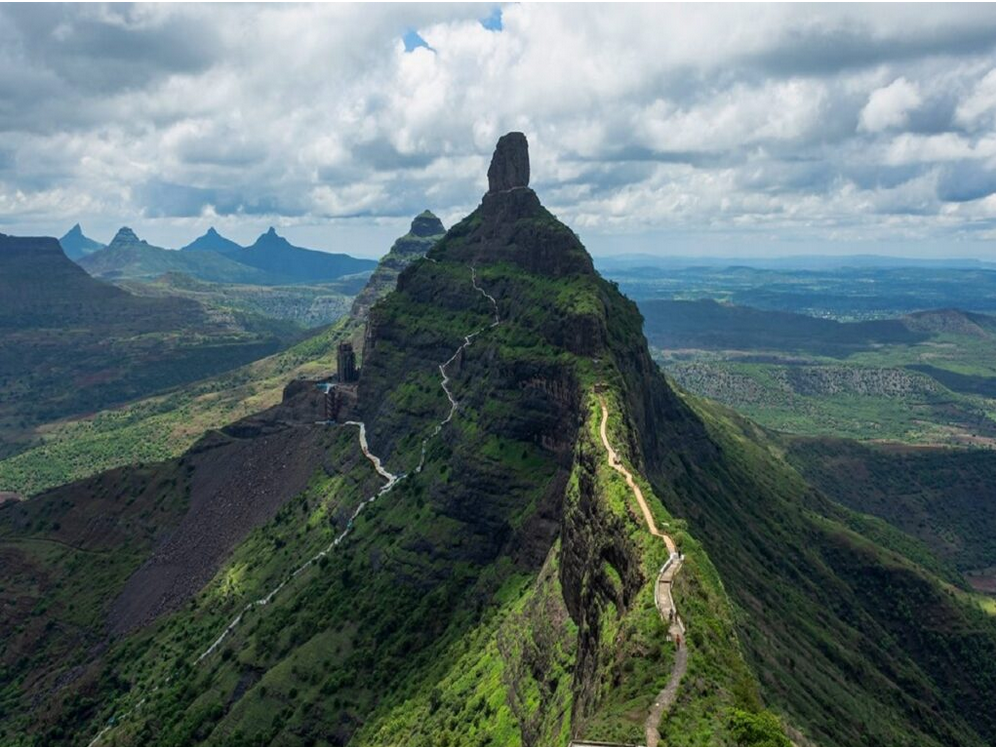
Planning a trip that is both a pilgrimage and a stairmaster is exciting. For you, that is Mangi Tungi. Imagine caverns carved into the cliffs, a 108-foot monolithic Jain statue looking out over the landscape, two angular rock spires rising from the Sahyadris, and a lengthy stone staircase winding up the slope. It feels like a true journey rather than just a photo stop, and it is dramatic without attempting to be. Maharashtra Tourism refers to it as the “Great Wall of Maharashtra” because of its unending steps and vistas of the ridge.
Mangi Tungi is located approximately 125 kilometers from Nashik city in the Satana taluka of the Nashik district. A thin saddle connects the site’s twin peaks, Mangi to the west and Tungi to the east. You have to ascend a stone stairway with more than 4,000 steps to get to the summit. The ascent is both aesthetically pleasing and spiritual due to the route’s numerous caves, shrines, and resting places.
Get ready for a more than 4,000-step staircase. With wide steps, covered rest areas, and groups of caverns built into the cliffs, the ascent is gradual. As you climb, you will come across little shrines and inscriptions. It’s best to take your time during the first hour; drink water, pace yourself, and take in the scenery.
November through February, when the weather is dry and cool, is the best window. If you like trekking during the monsoon season, try to go in late August or early September when it’s not as rainy.
If at all feasible, begin early, at sunrise. Including photo stops and temple visits, the majority of travelers who are reasonably fit do the trip in three to five hours.